Enterprise
Consistent code review across every team and repository
MergeHarbor gives large engineering organizations one review standard, the controls security teams expect, and costs finance can forecast.
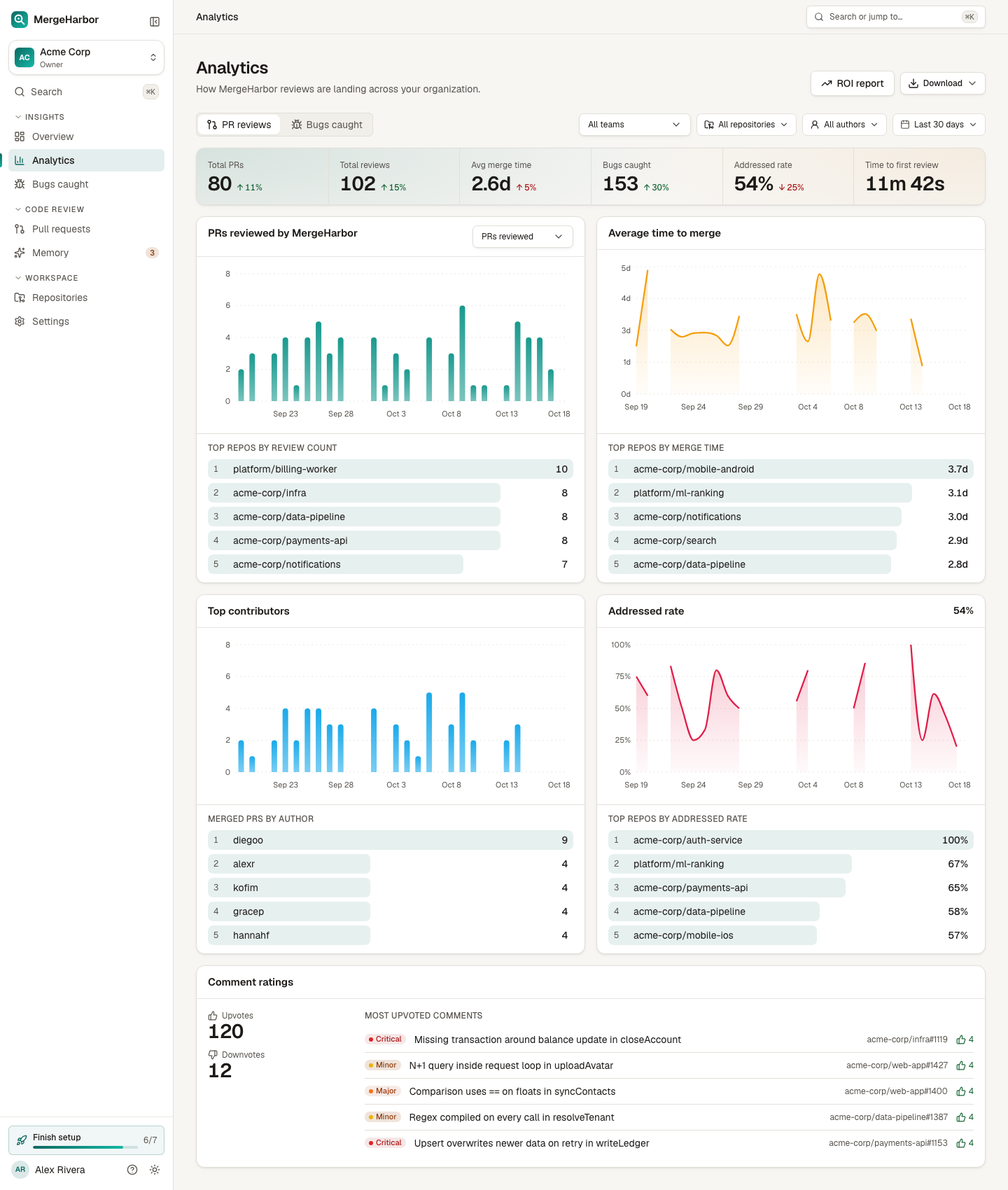
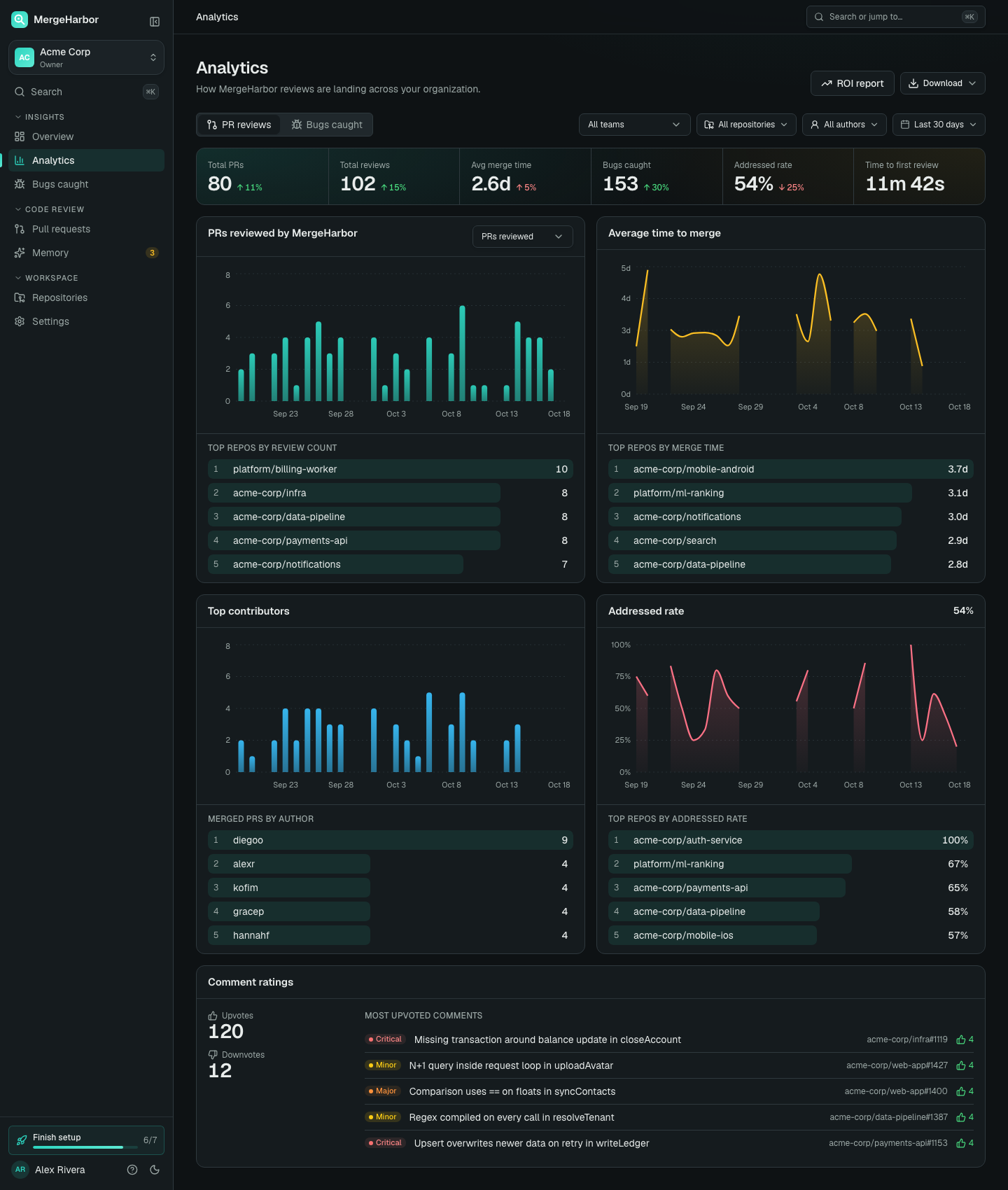
Deployment
Run MergeHarbor where your code lives
Choose our managed cloud or deploy into your own infrastructure — the product is the same.
Self-hosted
Your model accounts
Built for very large estates
Governance
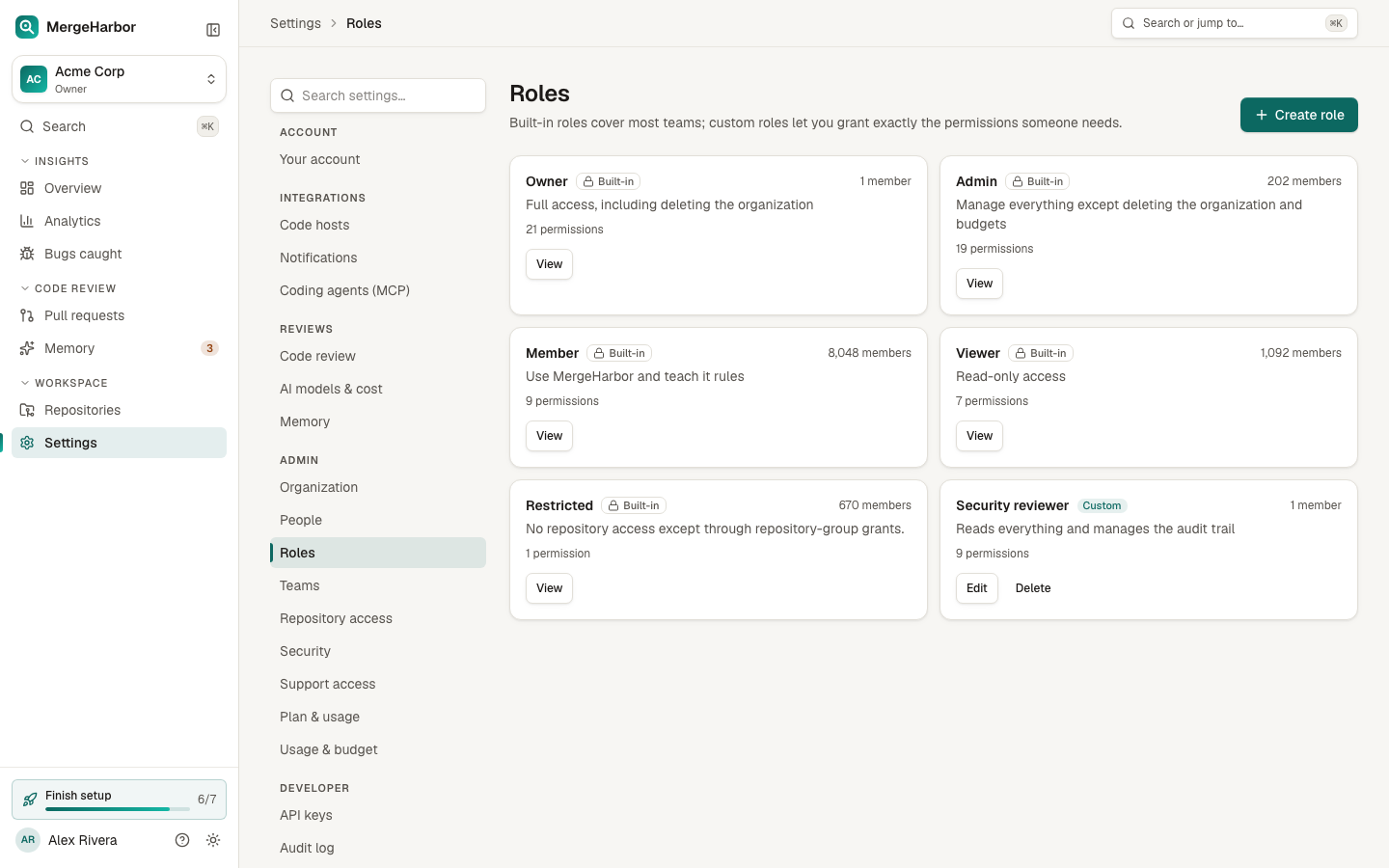
Controls for platform and security teams
SSO with enforcement
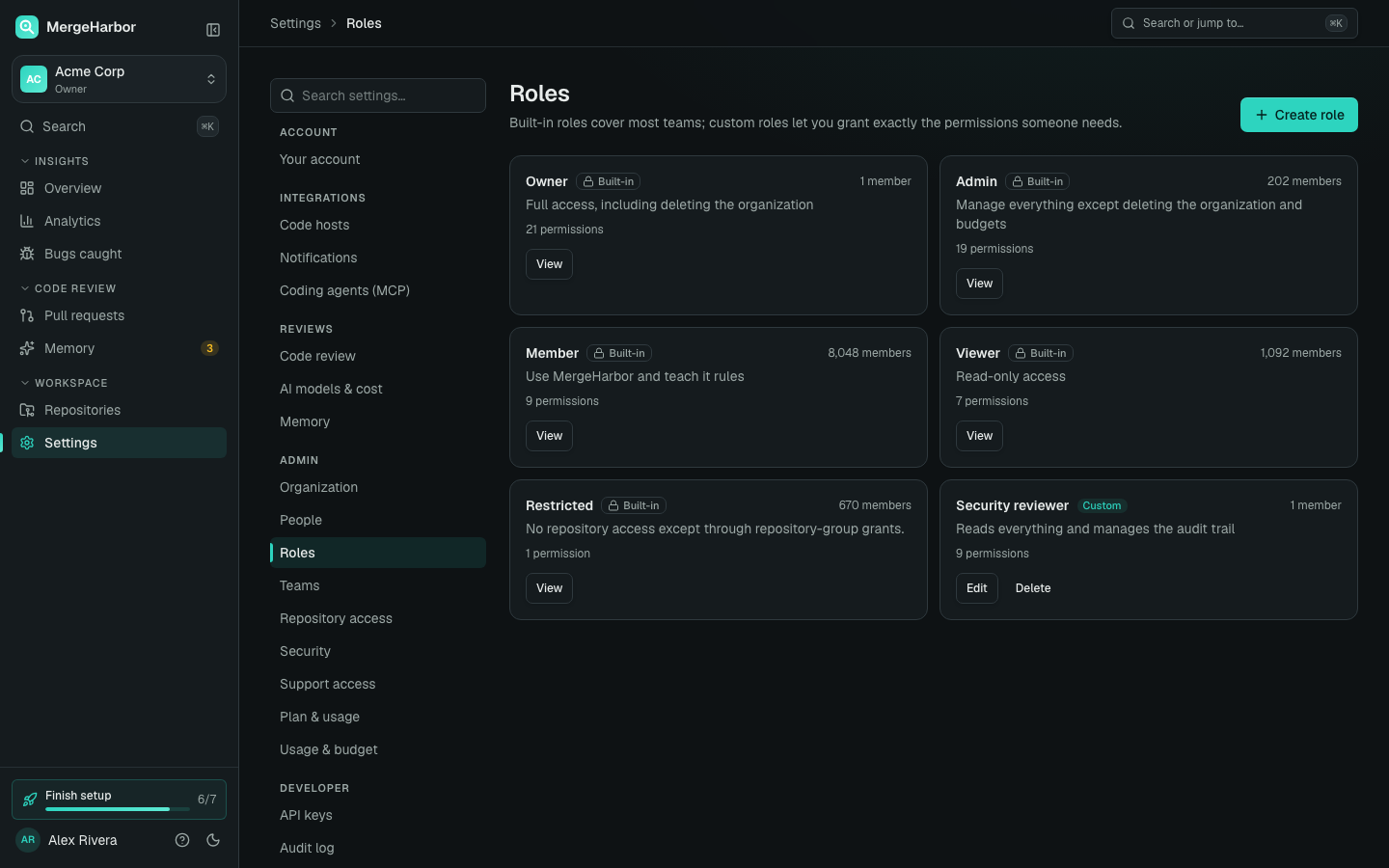
Roles and permissions
Audit log
Network and session policy
Secret redaction
Retention and residency
Configuration at every level
One standard, tuned for each team
Set defaults for the organization, override them per repository, and let teams keep repository rules in version control. The console shows the effective value of every setting and where it came from.
- Organization settings, repository overrides, and
.mergeharbor.yml - Rules scoped to paths, with approval for learned rules
- Knowledge base and related repositories for cross-repo context
- Budgets and unit economics per organization
Frequently asked questions
Can MergeHarbor run in our own environment?+
Yes. MergeHarbor ships as container images with a Helm chart for Kubernetes and Terraform for AWS. You run the API, workers, and review agent in your cloud and use your own model provider accounts, so source code and review data stay in your environment.
How does MergeHarbor handle very large codebases?+
Indexing is incremental and content-addressed: after the first pass, only changed files are processed, and renamed or duplicated files are never processed twice. Repositories are distributed across independent cells, each with its own database, search index, and workers, so capacity grows by adding cells.
Which identity providers are supported?+
Any OpenID Connect provider, including Okta, Microsoft Entra ID, Google Workspace, Auth0, and Keycloak. Organizations can enforce SSO, restrict sign-in to their email domains, and map identity-provider groups to MergeHarbor roles.
How do we evaluate MergeHarbor?+
Most teams start with a 14-day trial on a handful of repositories, then expand. For self-hosted evaluations, our engineers help you deploy and size the installation. Contact sales to plan an evaluation.
Do you offer an SLA?+
Enterprise agreements can include an uptime commitment with service credits and defined support response times. Contact sales for current terms.
Can MergeHarbor staff see our data?+
Not without your approval. In MergeHarbor cloud, support access is a time-limited session, read-only by default, that an owner of your organization approves and can revoke, and every action is recorded in your audit log. Self-hosted installations are fully under your control.
Which models does MergeHarbor use?+
MergeHarbor routes each task to the most cost-effective model that meets the quality bar for that change. Enterprise customers can restrict which providers and regions are used, or connect their own model provider accounts, including Amazon Bedrock and self-hosted open-weight models.
Have another question? Talk to our team
Plan your MergeHarbor rollout
Our engineers help you deploy, configure, and measure MergeHarbor across your organization.